TIME BECOMES PERSONAL
7. THE ORIGIN OF PERSONAL TIME
For millennia, time was experienced primarily as public, place-bound and communal: through the course of the sun, the changing seasons, religious rhythms, bells, towers and public clocks. The mechanical clocks of the late Middle Ages brought greater precision and authority to this temporal order. Those wishing to order their lives by time, however, remained dependent on a particular place or an external signal.
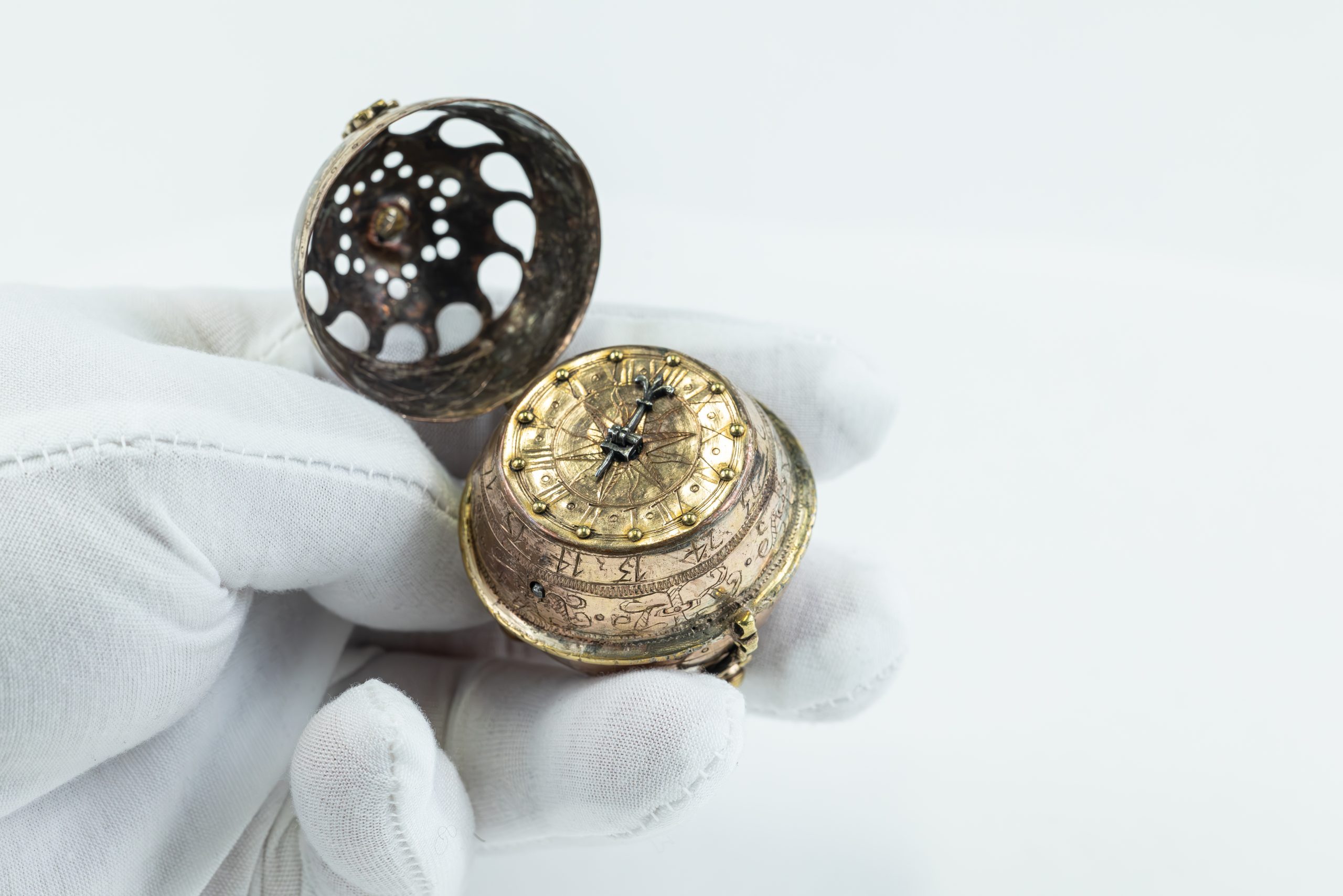
With the 1505 Watch, this relationship changed fundamentally. Mechanical timekeeping was miniaturised to a degree that allowed it to be incorporated into a form worn on the body, freeing it from a fixed location and enabling it to accompany the individual directly. A functioning mechanical timekeeper became a personal companion, making measured time visible and readable on the body.
The decisive historical step went beyond mere portability. A portable object can be moved from one place to another; a wearable watch, by contrast, is designed to be worn on the body and to accompany its wearer. This gave rise to a new category of mechanical timekeeping: the wearable mechanical watch.
Herein lies the origin of personal time. In this context, personal time does not refer to the individual experience of time—the sense that it passes more quickly or slowly depending on the circumstances. Nor does it suggest that the passage of time had become subject to human control. What was new was that mechanically measured time became personally accessible in a form worn on the body. It could now serve as an immediate point of reference for the course of the day, for individual action and for personal orientation. Public timekeeping was not displaced; rather, it was complemented by a personal relationship with time carried close to the body.
This new relationship between human beings, machines and time set in motion a development extending through pocket watches and wristwatches to today’s body-worn digital systems. Over time, technological systems became increasingly integrated into individual lives, bringing technology and information into ever closer relation with human decision-making.
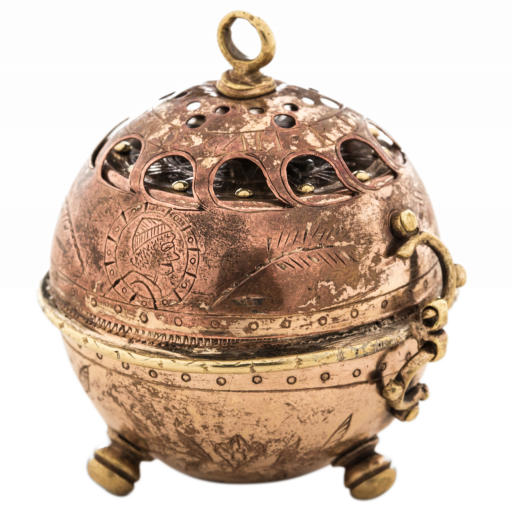
The following chapter considers how this personal relationship with time gives rise to a new form of human orientation and examines the role played in that process by the design of the pomander, particularly its inscription.