HUMANITY · TIME · CIVILISATION
10. THE CIVILISATIONAL SIGNIFICANCE OF THE 1505 WATCH
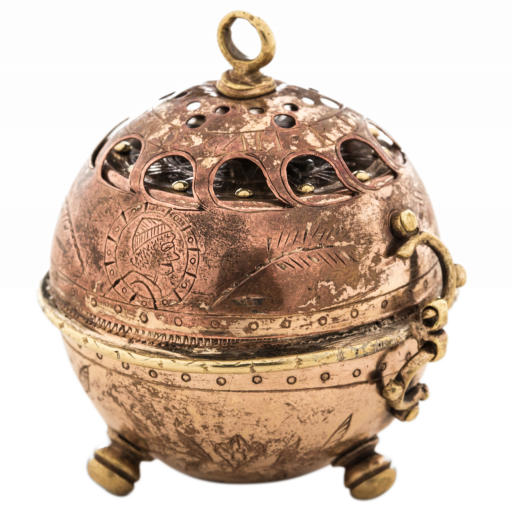
The civilisational significance of the 1505 Watch lies in the way it embodies, in a single surviving artefact, the origin of wearable mechanical timekeeping, the advent of personal access to mechanically measured time, and the beginning of an enduring relationship between human beings and machines. Its significance extends beyond the miniaturisation of the movement: through its integration into a pomander worn on the body, this technical innovation became part of human life, while the inscription introduced a further dimension of reflection.
As personally accessible mechanical timekeeping became more widespread, it provided a new basis for planning, coordination, precise timing and dependable arrangements. Appointments, working hours and workflows, journeys, commercial transactions and technical processes could increasingly be timed, coordinated and documented with greater accuracy. The wearable mechanical watch thus became an instrument within the broader temporal organisation of social and economic life.
The 1505 Watch stands at the beginning of a line of development extending through pocket watches and wristwatches to today’s body-worn digital systems. Over the course of this development, the range of functions expanded: from displaying time and providing information to enabling communication and supporting decision-making. At the same time, human beings, machines and time became ever more closely intertwined.
As the development of artificial intelligence accelerates, this historical trajectory takes on added relevance. Information can be generated, analysed and disseminated ever more rapidly, while AI systems are increasingly involved in communication and decision-making processes. As the speed and reach of these systems increase, it becomes ever more important for human beings to scrutinise their outputs, place them in context and use them responsibly. Human orientation therefore remains the decisive measure of technological development.
Technological systems can measure, calculate and simulate; they can provide information and present possible courses of action. Yet the conscious appraisal and interpretation of their outputs—and responsibility for judgement, decision and action—remain human responsibilities alone.
Herein lies the civilisational significance of the 1505 Watch: it stands not only at the origin of wearable mechanical timekeeping, but also at the beginning of a development whose effects on the relationship between human beings, machines, time and decision-making continue to the present day.
Guardianship therefore safeguards more than an extraordinary historical artefact. It preserves the material evidence of this civilisational turning point while sustaining awareness of an enduring human responsibility: measured time acquires human meaning only when human beings perceive it consciously, interpret it, incorporate it into their decisions and accept responsibility for their actions.
Closing Statement
The mechanical movement of the 1505 Watch makes the passage of time legible. Together with the pomander, its surface design and its inscription, this display becomes a question addressed to every one of us.
Do we recognise the value of the time we are given—and live it with awareness?