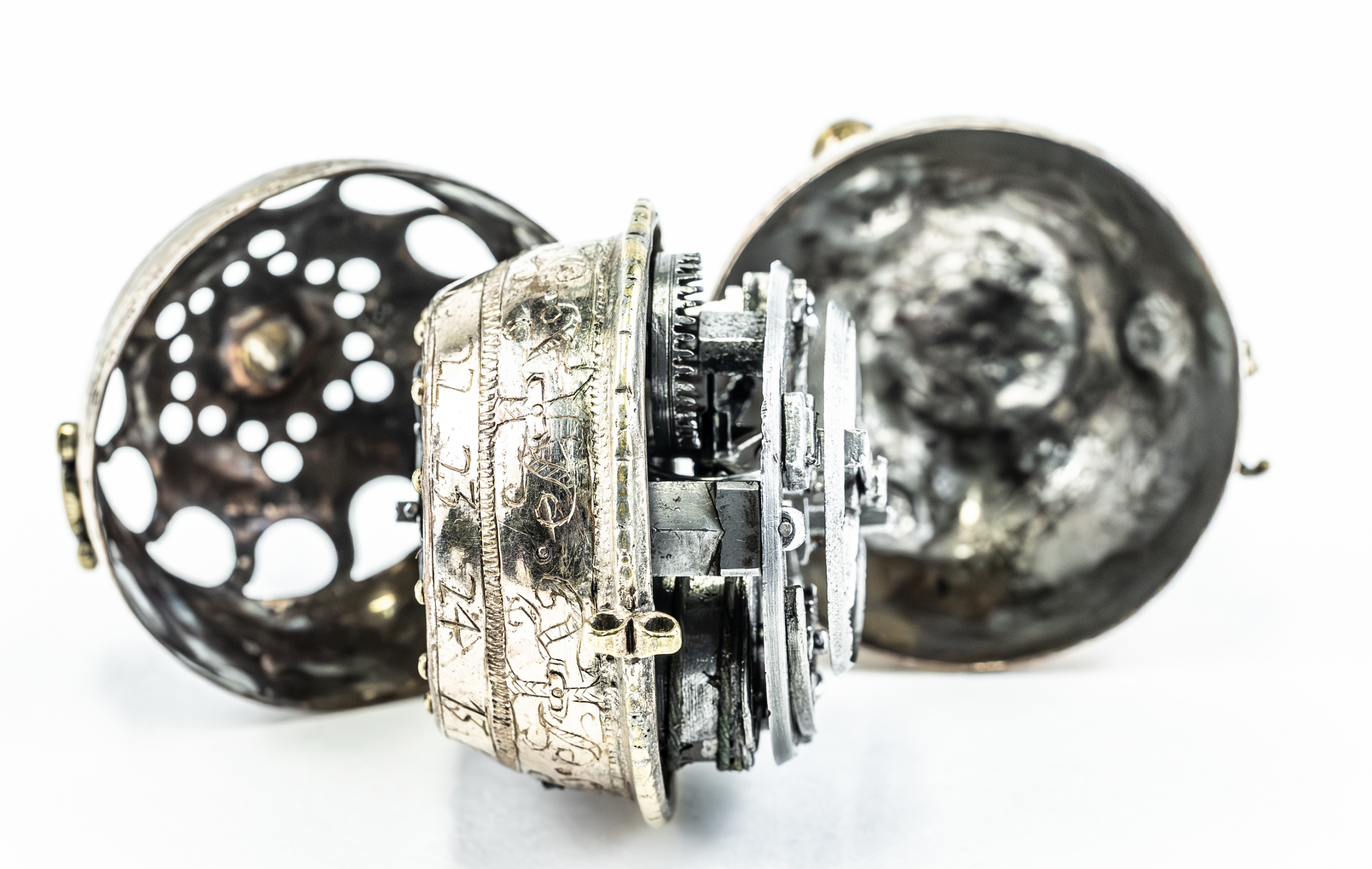
5. THE MECHANICAL MOVEMENT
The mechanical movement of the 1505 Watch represents an achievement of historic significance in engineering, horology and craftsmanship. The available space—only about 3.60 × 3.55 centimetres—required both the extreme miniaturisation of its individual components and a constructional layout conceived specifically for this scale. Only through this integrated design could energy storage, power transmission, the wheel train, escapement and regulation be combined within so compact a space to form a functioning mechanical whole.
Its technical importance resides neither in any single component nor in miniaturisation alone. Around 1500, the reduction in size of mechanical movements formed part of a longer technological development. With the 1505 Watch, however, the decisive transition occurred from progressive miniaturisation to a mechanical watch designed to be worn on the body. For the first time, a complete mechanical movement was designed and made at a scale that allowed it to be integrated into the pomander that served as its case.
At this new technical scale, miniaturisation was not simply a matter of reducing dimensions. Horological examination shows that it alters every mechanical parameter, most notably the balance of forces at the escapement. The constructional challenge was to coordinate the reduced components so precisely that they would operate together as a functioning mechanical system.
The components working together within this confined space include the mainspring and barrel, gut line and fusee, wheel train, verge escapement with a balance wheel, and bristle regulation system. A swivelling regulator arm is riveted to the edge of the movement plate. Two animal-hair bristles act as elastic stops against the arms of the balance wheel. By changing the position of the regulator arm, the amplitude of the balance can be restricted or increased, thereby adjusting the rate of the watch. The resilience of the bristles also allows a gentler reversal of motion.

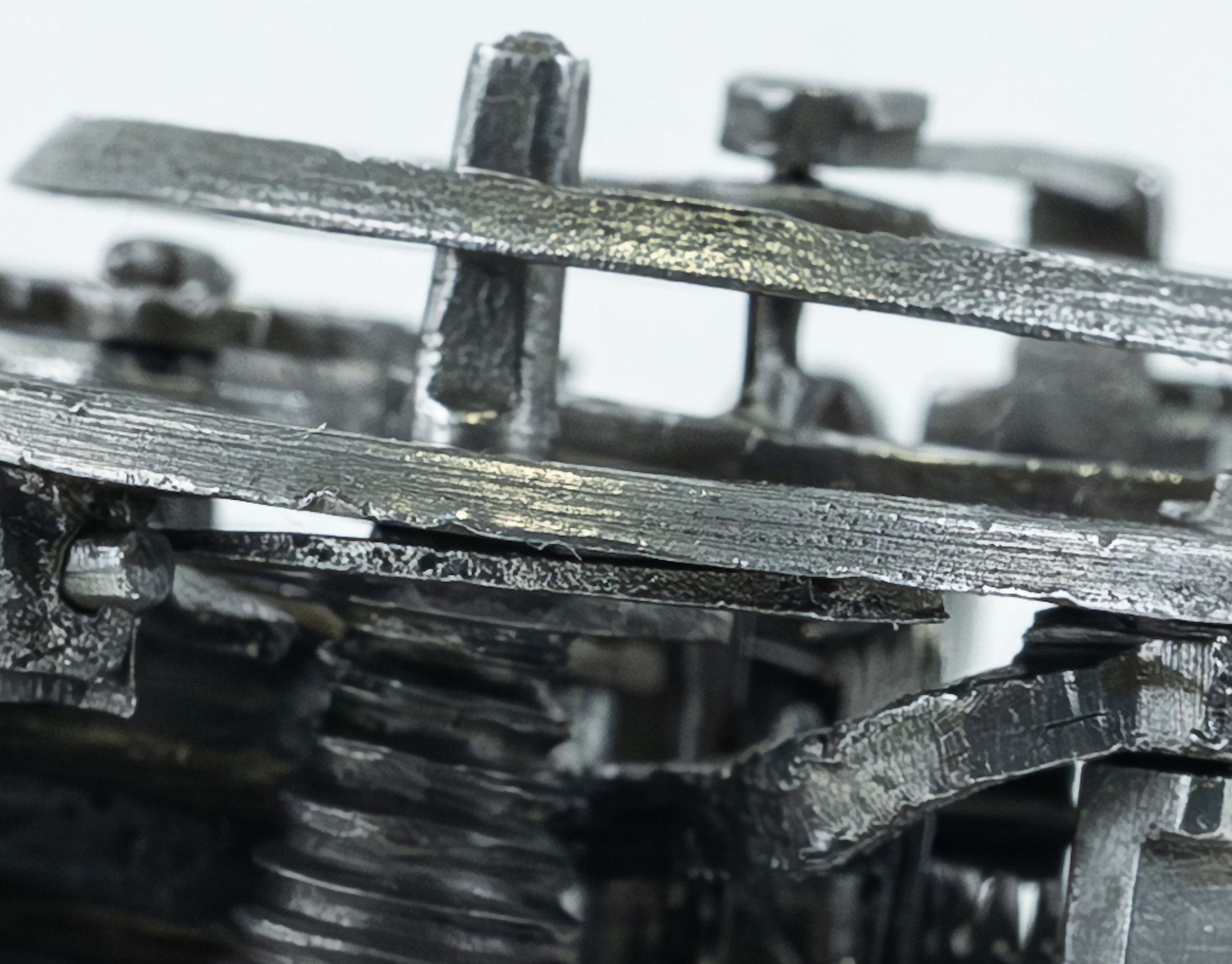

The movement was fitted into the pomander case. Its confined interior determined the spatial framework within which the components were arranged. Movement and case were therefore structurally and functionally interdependent.
The conception of the movement and the manufacture of its individual components formed only part of the overall achievement. Equally important were their spatial arrangement, assembly and regulation. The horological findings document an exceptionally precise and functionally coordinated arrangement of the components, together with the regulator arm’s wide range of adjustment. Realising this interplay required the highest order of mechanical ingenuity, an integrated understanding of the movement as a horological system, and precision craftsmanship.
That such a movement could be conceived, made, assembled and brought into reliable operation around 1500 explains the particular respect it continues to command among horologists today.
The movement itself still allows this integrated achievement to be understood directly. Its components were miniaturised and assembled into a mechanical whole capable of running in all positions and of being worn on the body. Therein lies its singular historical significance: it laid the technical foundations for wearable mechanical timekeeping and ushered in a new relationship between human beings, machines and time.
The following chapter turns to the pomander, which served as the case and formed the second principal component of the 1505 Watch.