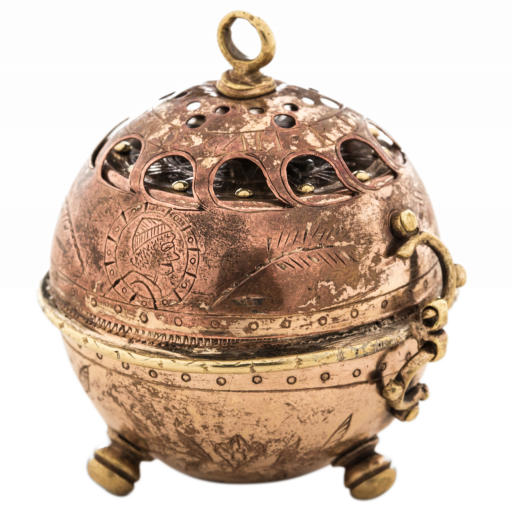
2. THE 1505 WATCH – ARTEFACT, ORIGIN AND ATTRIBUTION
The Artefact
The 1505 Watch comprises two principal components: a mechanical movement made of iron and a pomander of fire-gilt copper. The pomander forms the case of the watch and encloses its miniaturised movement. The revolutionary step lay not in either component alone, but in their functional integration: mechanical timekeeping assumed a form expressly conceived to be worn on the body. More than five centuries after its creation, the movement remains fully operational.
Nuremberg and the Context of Its Creation
The 1505 Watch was made in Nuremberg around 1505. At the turn of the sixteenth century, the city was a major European centre of metalworking, precision craftsmanship, technical innovation, trade and humanist culture. It brought together advanced metallurgical expertise, mechanical knowledge and workshop practice with mathematics, far-reaching commercial networks and humanist thought.
Networks of trade and learning also brought to Europe bodies of technical and mathematical knowledge that had been preserved, developed and transmitted across the cultures of antiquity and the Byzantine and Arab-Islamic worlds. In Nuremberg, these currents of knowledge encountered the city’s highly developed traditions of technical and artisanal practice.
Nuremberg thus provided an environment in which design, calculation, mastery of materials and craftsmanship could be translated into new technical solutions. The making of the 1505 Watch depended upon precisely this convergence of knowledge and skill.
Peter Henlein and the Attribution
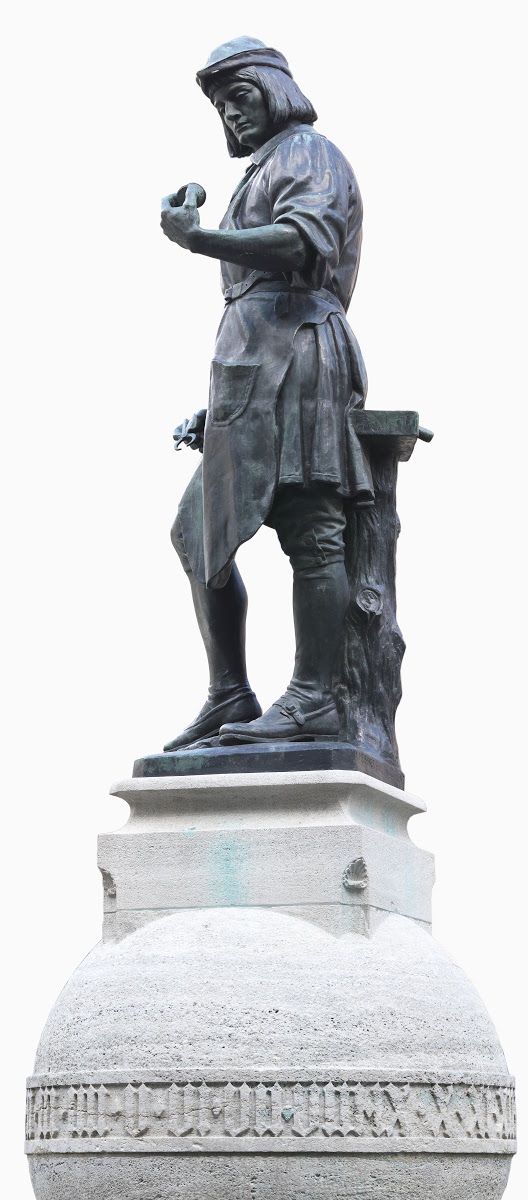
On the basis of historical sources, the 1505 Watch is attributed to Peter Henlein, a Nuremberg locksmith who later became a clock- and watchmaker. He stood at the intersection of the locksmith’s craft and the emerging practice of clockmaking.
The watch survives in a condition that allows its technical, material and historical dimensions to be investigated scientifically. Over a period of more than ten years, the 1505 Watch has been studied through an interdisciplinary research programme employing modern methods of scientific analysis and documentation.
Building on this body of evidence, the following chapter presents the scientific investigation of the 1505 Watch.