Nuremberg
The 1505 Watch
Where Time Became Conscious
In 1505, time was first worn upon the human body
With this transformation, time entered into a direct relationship with human life, inviting reflection on the right moment and on how life itself is lived.
The First Wearable Timekeeping
In the year 1505, in Nuremberg, a work was created that fundamentally transformed the human relationship with time. For the first time in history, time was given a form that could be carried upon the human body.
In the year 1505, in Nuremberg, a work was created that fundamentally transformed the human relationship with time. For the first time in history, time was given a form that could be carried upon the human body.
The Nuremberg locksmith Peter Henlein created the 1505 Watch — the first wearable timekeeping in the world — an object in which technical precision, masterful craftsmanship, and cultural meaning converged into a new unity.
Until that moment, time had largely been a public phenomenon. It structured life through the sound of bells and through great mechanical clocks whose rhythm governed the communal life of cities. With the emergence of the wearable watch, this order shifted profoundly.
Time moved from the distance of public space into the immediate proximity of the individual. It was no longer only heard or seen — it could be carried.
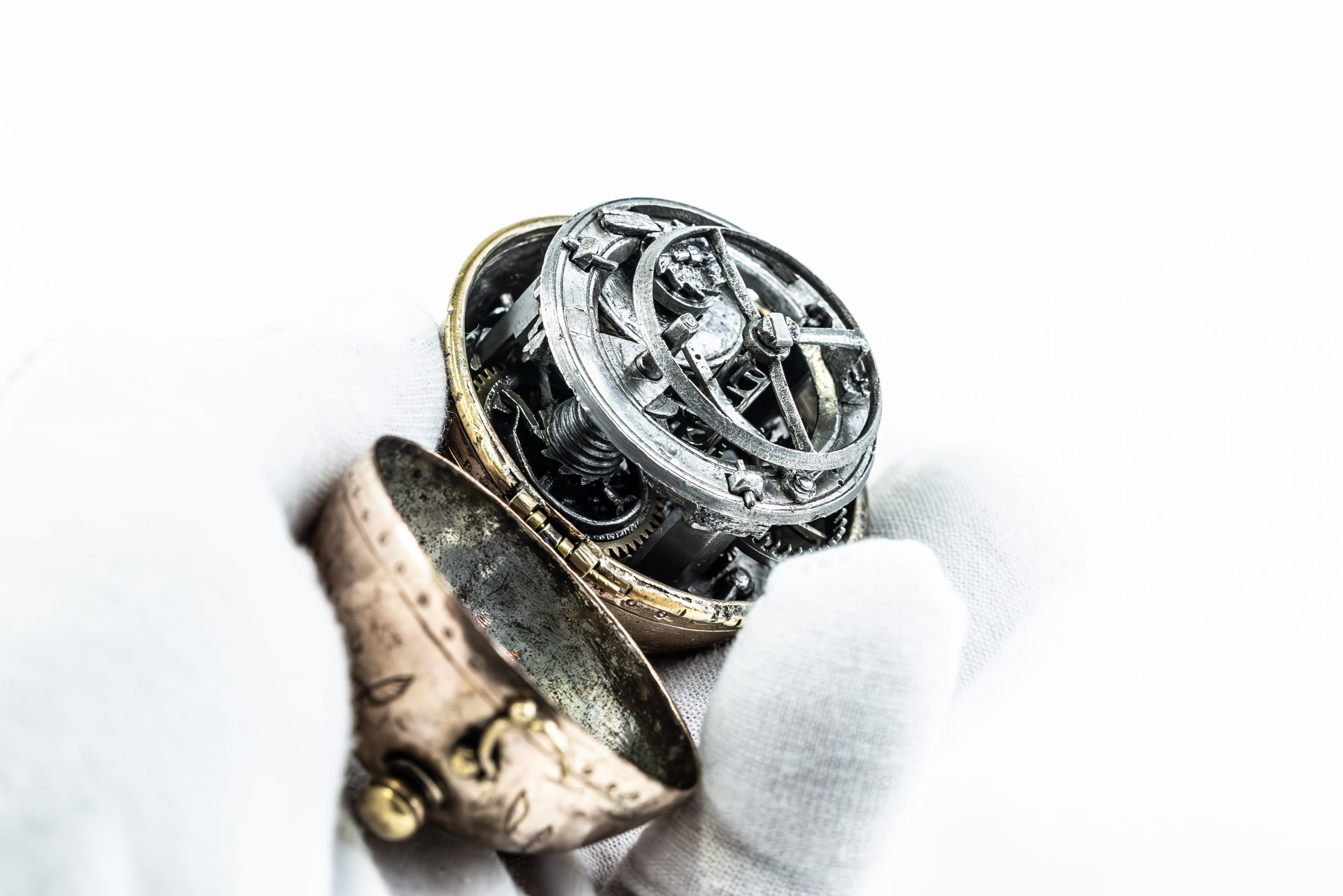
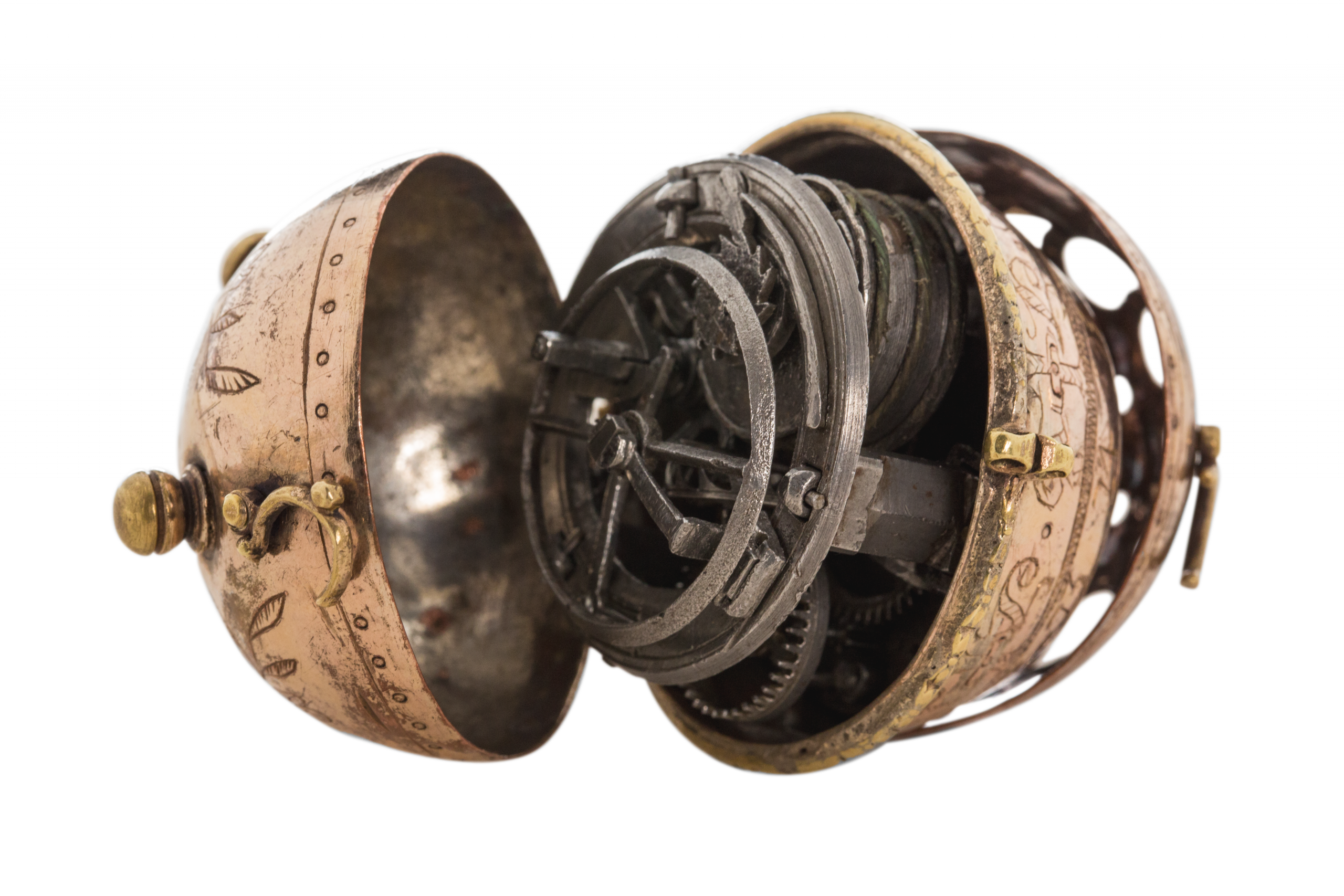
The technical foundation for this transformation was an extraordinary achievement of miniaturization. Mechanical timekeeping had previously been bound to large constructions — tower clocks as well as early table clocks of considerable size. This mechanism had to be reduced to a scale that could be contained within a small wearable case.
Peter Henlein achieved this reduction at a time when neither modern precision machinery nor mathematical modelling methods existed. With exceptional craftsmanship and precision, wheels, pinions, springs, and bearings were fashioned and harmonized in such a way that stable timekeeping in an unprecedented miniature form became possible.
With this step began the development from which the entire history of the wearable watch emerged. From early pocket watches to the wristwatches of the present, a continuous line leads back to that moment in which time was first given a personal, wearable form.
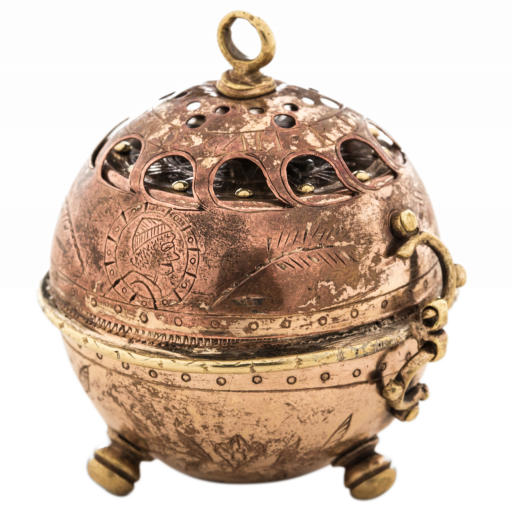
Yet the significance of the 1505 Watch does not end with its mechanism. Equally decisive is the form in which this movement was embodied. The case is designed as a pomander — a spherical fragrance capsule whose origins lie in the cultural traditions of the Orient and which reached Europe through the trade routes of Asia. In the late Middle Ages such pomanders were carried as personal objects and were valued as precious and protective vessels.
The spherical form of the pomander creates a formal closure in which interior and exterior correspond with one another. It protects the movement within while simultaneously giving the object a symbolic order upon its surface.
This surface is not randomly designed. Engravings, symbols, and structural elements articulate the case into distinct zones. Upper, middle, and lower sections form a coherent surface architecture whose meaning unfolds only in their relationship to one another. Mechanism, form, and symbolism do not stand apart — they form a structural unity.
Within this order culminates the inscription engraved upon the surface of the pomander:
D VT ME FUGIENT AGNOSCAM R
As a linguistic testimony of its era, the inscription first reflects the experience of transience. In its philological dimension it refers to the fleeting and physical nature of time. In a curatorial reading this thought condenses into the question of the right moment. Yet the inscription issues no command. Instead, it opens a space of reflection — a space of self-awareness in which the human being may recognize themselves in relation to past, present, and future.
Only in conjunction with the complete architecture of the pomander does this meaning fully unfold. The engravings, the symbolic structure of the surface, and the movement within converge into a unified conception in which time is not merely measured but may be consciously understood.
It is precisely in this unity that the true singularity of the 1505 Watch resides. Time is no longer only counted or indicated — it is carried. With the wearability of time arises a new form of self-relation: past, present, and future enter into a direct relationship with the individual.
The creation of this work also belongs to a broader historical context. Around the year 1500, Nuremberg stood among the most important centers of trade, metallurgy, and humanist scholarship in Europe.
At the same time, this period was shaped by intense trans-cultural currents of knowledge. Scientific and technical insights from different regions of the world — from European, Oriental, and also from the scholarly traditions of the Islamic world — converged and formed the background for new developments.
More than five centuries later, the 1505 Watch still endures. It is not only an extraordinary testimony to masterful craftsmanship but also the expression of a historical turning point in humanity’s understanding of time. Today, its significance appears clearer than ever. The meaning embedded within its structure is only now beginning to be fully recognized.
Today more than eight billion people live upon the earth. All organize their lives according to the same structure of hours, minutes, and seconds. Each human being experiences this time in a different way — yet all share the same continuous flow.
The 1505 Watch therefore remains not merely an artifact of the early modern era, but a key artifact of human time-consciousness. Within it, mechanism, form, and meaning converge into a structure that opens a space of reflection — a space in which the human being may not only recognize their own moment, but consciously understand it and act from that understanding.
Since its creation in 1505, the relationship between human beings and time has fundamentally changed. Time is no longer only measured or heard; it is carried and consciously experienced.
Thus the 1505 Watch stands at the origin of a development in which time appears no longer solely as an order of the world, but as a dimension of human existence — understood in the lived moment.
Where time does not merely pass,
but is consciously understood —
and lived in the human moment.