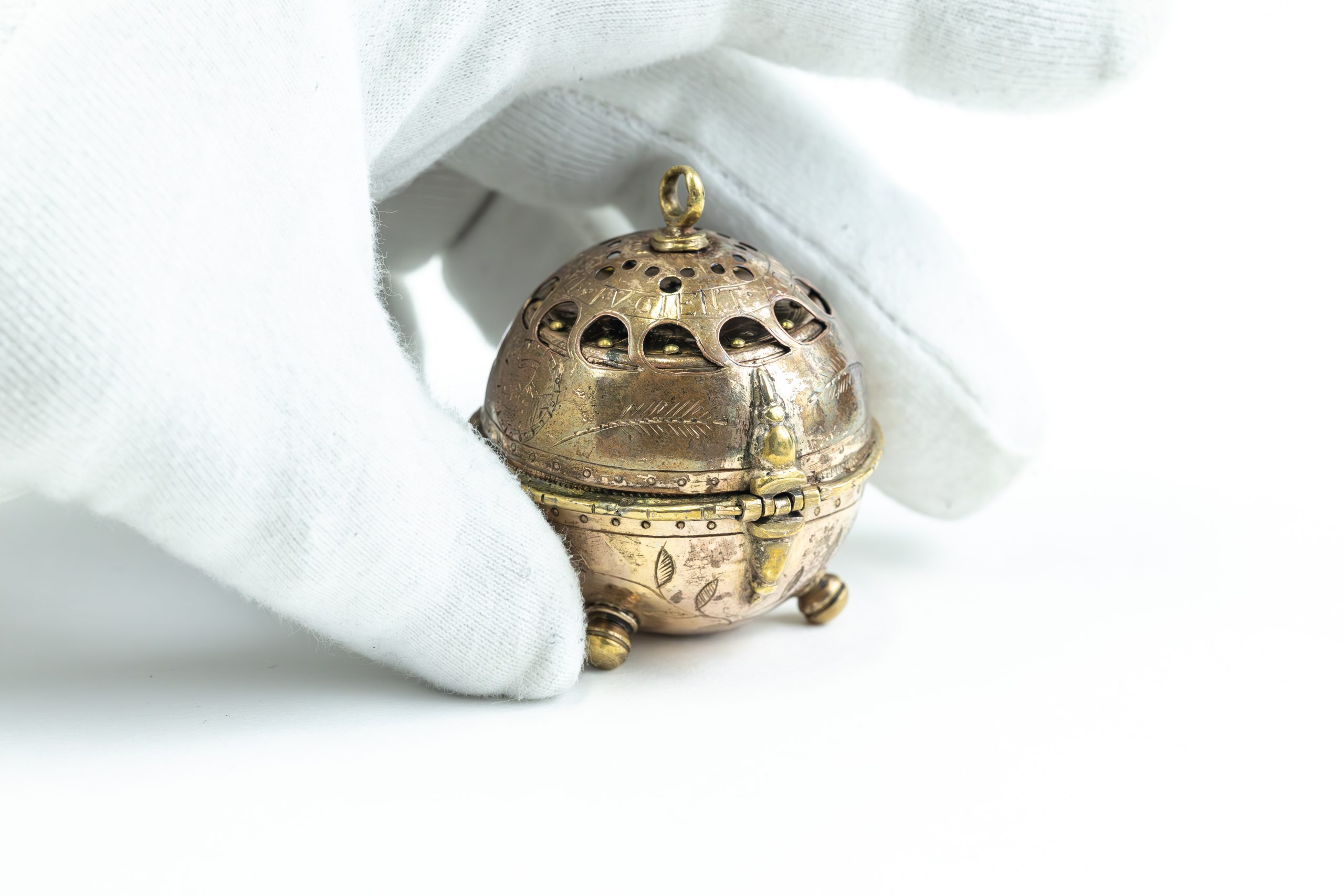
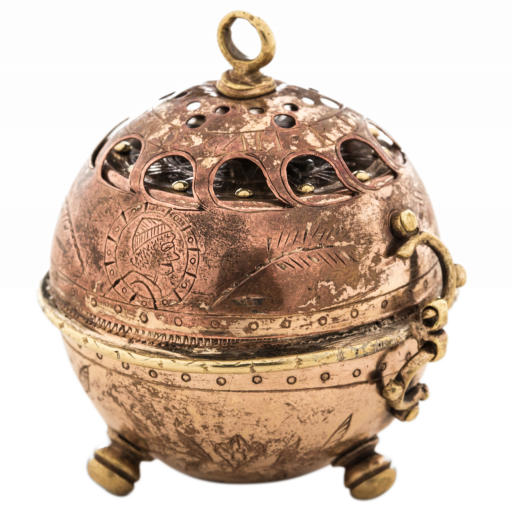
Preserved
THE GUARDIANSHIP
GUARDIANS OF TIME
The Guardianship of the 1505 Watch as Responsibility Toward Humanity, Time, and the Future
The Guardianship of the 1505 Watch arises from the recognition that the 1505 Watch does not merely represent an extraordinary work of early horology, but embodies a singular point of origin in humanity’s relationship with time. With it, in the year 1505, there emerged not only the oldest and first wearable watch in the world, but at the same time, for the first time, an immediate connection between the human being and time itself.
What had previously been experienced primarily as a public order of the world — visible through towers, audible through bells, and shaped through collective rhythms — entered, through the wearability of time, for the first time into direct proximity with human life.
It is precisely herein that the historical and civilizational singularity of the 1505 Watch resides. For with the wearability of time there began not merely a new form of mechanical miniaturization or the origin of wearable horology. Rather, for the first time, there emerged a new relationship between the human being and time, through which time was no longer experienced exclusively as an external order of the world, but increasingly entered into relationship with one’s own life, one’s own actions, one’s own perception, and one’s own existence.
It is precisely from this historical magnitude that the Guardianship of the 1505 Watch emerges. The Guardianship therefore does not merely describe the preservation of an extraordinary historical work. It describes a continuing cultural responsibility toward making humanity’s relationship with time visible.
For the 1505 Watch is not replaceable within the history of humanity. As the oldest and first wearable watch in the world, it stands at the singular origin of wearable time and therefore at the beginning of that development through which time became a permanent companion of human life. Yet the true significance of the Guardianship extends far beyond horology itself.
For the 1505 Watch possesses the extraordinary ability to open a universal space of human reflection upon time. Hardly any other historical work connects mechanics, time, human existence, cultural development, consciousness, and questions of the future in a comparable way. Precisely through this, the Guardianship gives rise not merely to a historical responsibility, but to an international cultural stage of extraordinary reach — a global space of human orientation, reflection, and engagement with the question of how the human being lives within time.
The Guardianship thereby opens not only historical discourse, but a global space of reflection concerning questions of human existence, responsibility, consciousness, orientation, and the future.
For every human being lives within the same order of hours, minutes, and seconds, and yet every human being experiences time in an entirely individual manner. Every culture, every society, every religion, and every generation stands unavoidably in relationship with time. The 1505 Watch stands at the origin of this shared human reality.
Precisely herein lies the worldwide significance of the Guardianship. The Guardianship bears responsibility for ensuring that the historical, philosophical, cultural, and civilizational significance of the 1505 Watch remains visible, understandable, and alive. Not merely as an object of historical observation, but as a continuing point of orientation within humanity’s relationship with time.
For the true depth of the 1505 Watch is only now beginning to open itself more comprehensively. Its significance does not exhaust itself in its mechanics or in its historical classification, but rather in its ability to confront the human being with the question of one’s conscious relationship to one’s own time.
Whoever seriously engages with the 1505 Watch simultaneously begins to engage with one’s own life — with the question of how time is consciously lived, how decisions are consciously made, and how the future may consciously be shaped before time passes unnoticed. Precisely herein lies the extraordinary power of the 1505 Watch. And precisely herein, at the same time, lies the responsibility of the Guardianship.
For the Guardianship bears responsibility for ensuring that humanity does not lose its conscious relationship with time.
Today, this responsibility possesses a historical relevance that extends far beyond the classical preservation of cultural heritage. In an epoch of technological acceleration, algorithmic systems, artificial intelligence, digital overload, and the increasing convergence of human beings and technology, the question of the human being’s conscious relationship with time acquires a new historical urgency. Time becomes accelerated, fragmented, and increasingly structured through systems that influence human perception, attention, and decision-making.
Precisely within this development, the Guardianship of the 1505 Watch acquires an entirely new level of significance. For the 1505 Watch stands at the historical origin of that development in which mechanics became permanently connected with the human body for the first time.
As the first wearable machine upon the human body, it marks the beginning of a development whose deeper cultural, philosophical, and civilizational significance is only now beginning to become visible. Through this, the Guardianship becomes not merely a responsibility toward the past, but equally a responsibility toward the present and the future of human existence.
The Guardianship of the 1505 Watch must therefore be understood as a continuing cultural responsibility carried forward across generations. Not as prestige, not as exclusive possession, and not as an expression of personal importance, but as an intergenerational responsibility toward a unique origin point of humanity’s relationship with time. Precisely herein lies the historical sovereignty of the Guardianship.
For the Guardianship preserves not merely a historical work. It preserves a global space of human orientation. A space of conscious reflection upon time, existence, responsibility, and the future. And it bears responsibility for ensuring that the significance of the 1505 Watch remains alive, understandable, and accessible — not merely for the present, but for future generations of humanity.
The Guardianship of the 1505 Watch therefore stands not merely for heritage in the classical sense, but for the continuing responsibility toward a civilizational origin point of humanity’s relationship with time.
It unites historical legacy with present orientation and future responsibility. Precisely herein do legacy and heritage unite into a continuing cultural responsibility toward humanity, time, and the future.
For time does not merely pass.
The human moment must be consciously recognized before it disappears.
THE 1505 WATCH
Guardianship as Responsibility Toward Humanity, Time, and the Future.